
Here Are the Results of the WNBA’s Emergency League Meeting
The WNBA assembled a task force to discuss transgender athlete participation after the subject suddenly became impossible to ignore. Now, after that discussion, the league says there are “no immediate eligibility matters” affecting it.
That answer isn't likely to make the underlying question disappear.
The controversy accelerated after former NBA players Enes Kanter Freedom and Royce White announced plans to declare for the WNBA draft. Their announcements put a provocative twist on a debate that has already reached numerous women's sports: What, precisely, determines eligibility to compete in a league reserved for women?
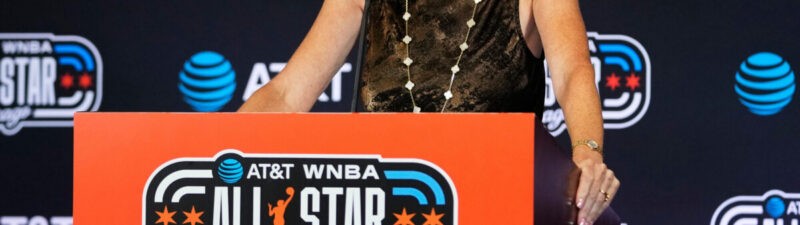
WNBA Commissioner Cathy Engelbert acknowledged the growing controversy in an internal memo last week.
“I know many of you have received questions in recent weeks regarding transgender athlete participation in women’s basketball, and I expect this topic will continue to receive significant attention,” Engelbert wrote, according to the Associated Press.
She said a task force consisting of team presidents and general managers would discuss the subject at a previously scheduled meeting.
Following that meeting, however, the league offered little detail about what had been decided.

WNBA holds meeting to discuss trans athlete issue; still unable to determine what a woman is.
The women’s basketball league has held committee meetings to determine what a “woman” is and discuss existing eligibility requirements.
The WNBA has also released a statement… pic.twitter.com/segzKYU9UM
— Oli London (@OliLondonTV) August 13, 2026
“Today’s meeting covered a wide range of topics, including ongoing discussions on transgender athletes and the continued hate and vitriol directed at players online,” a WNBA representative said, according to the New York Post.
“We will continue to engage all league stakeholders in the coming weeks and months. We will approach these important conversations thoughtfully and in alignment with the values of our league.”
Then came the line that raises an obvious question.

“There are no immediate eligibility matters affecting the WNBA and we strongly denounce the bad-faith efforts to use these topics to demean or marginalize others.”
The second part addresses abusive behavior surrounding the debate, which the league is entitled to condemn. But it doesn't answer the eligibility question that prompted Engelbert's task force discussions in the first place.
Under the league's collective bargaining agreement, according to OutKick, “Only players who are women are eligible to play in the WNBA.”
Traditionally, that sentence would have been straightforward. The current dispute exists because disagreements over sex and gender identity have complicated how sporting organizations define categories previously understood to be sex-based.
That leaves the WNBA with a practical question: What does “women” mean for purposes of player eligibility?
The issue isn't entirely hypothetical anymore, even if Kanter Freedom and White are making their declarations partly to force the question into public discussion. Their announcements demonstrate why the league eventually needs an eligibility standard capable of handling an actual application.
WNBA players themselves have also been drawn into the argument.
Sophie Cunningham has publicly argued against allowing men to compete in women's basketball, while Caitlin Clark has said leagues should determine their own rules governing inclusion in women's sports. Those statements have generated substantial debate both inside and outside basketball.
The league's current position appears to be that no immediate case requires a definitive ruling. That may be technically true if no applicant currently before the WNBA requires an eligibility determination.
But “not immediate” isn't the same thing as “settled.”
Engelbert's own memo acknowledged that transgender participation would continue receiving attention, and the decision to put the subject before a task force confirms that league officials consider it worthy of discussion.
The WNBA also has reasons to proceed carefully. Eligibility rules can implicate collective bargaining provisions, employment questions, competitive fairness and potentially litigation. A policy written in response to social-media pressure could create consequences well beyond the current controversy.
That is also why simply denouncing “bad-faith efforts” won't resolve the legitimate policy question buried beneath the online fighting.
Critics can behave abusively and still raise a question that requires an answer. Likewise, condemning harassment doesn't require the league to avoid establishing clear eligibility standards.
For the moment, the WNBA's collective bargaining agreement says only women may play. If everyone agreed on exactly what that meant for eligibility purposes, there would have been little need for Engelbert's memo or a task-force discussion about transgender athletes.