

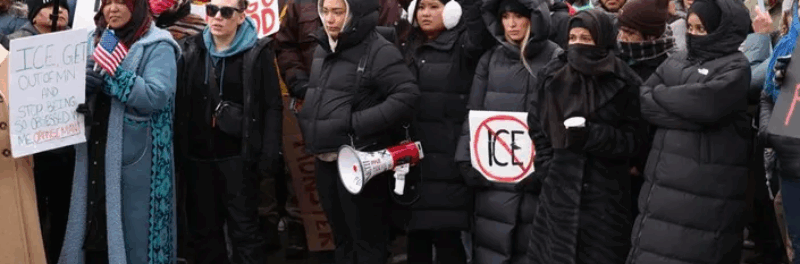
Anti-ICE Protests Continue
Social media has become the central nervous system of modern information, a place where politics, culture, and personal grievance collapse into a single, endlessly scrolling feed. It rewards provocation over persuasion and spectacle over substance, and in doing so it has turned political frustration into performance art. Few phenomena illustrate this better than the recent surge of viral videos featuring activists spiraling in isolation, broadcasting outrage not to persuade anyone, but to be seen having it.
The more I go to these anti-ICE protests and see who shows up...
The more and more convinced I am that this is primarily a white, older, liberal women's movement.
It's EXTREMELY rare to see ANYONE of color or ANYONE in their 20s.
Can anyone explain to me why this is the case? pic.twitter.com/crIpkZyFyZ
— Matt Van Swol (@mattvanswol) January 12, 2026
The rhetoric itself has grown increasingly extreme, often framed as dark humor or deliberate shock. Calls to “rethink” foundational civic principles are not policy proposals so much as expressions of cultural exhaustion. They function as satire sharpened into a cudgel, aimed less at solutions than at venting anger toward a perceived political enemy. In this environment, exaggeration is currency. The more outrageous the claim, the more likely it is to spread, detached from any realistic intention of implementation.
I call her the ICE LADY.. pic.twitter.com/LQMpSkSpGW
— Ben Bankas (@BenBankas) January 10, 2026
One of the striking visual patterns in these viral clips is solitude. The setting is frequently a car, a kitchen, or a bedroom, with the speaker addressing a phone camera as if it were a sympathetic confidant. That isolation is not incidental. Social media collapses the distinction between public discourse and private meltdown, allowing deeply personal rage to masquerade as collective movement. The absence of other people in the frame becomes a silent commentary on how alienating this mode of activism has become.
A liberal Instagram influencer called ‘kris.and.dave’ has 1.4 million followers
THIS is what inciting extreme violence looks like, and there are 475k likes on this post
“As a combat veteran, I'm having a hard time seeing the difference between ICE and ISIS. ICE covered their… pic.twitter.com/8EQ5Bn128K
— Wall Street Apes (@WallStreetApes) January 12, 2026
Even when these figures appear in groups, the dynamic rarely improves. Outrage compounds itself, becoming louder, more theatrical, and less coherent. The performance overtakes the message, and any original grievance is buried under layers of screaming irony and recycled slogans. Cultural references are dragged into the chaos, not as homage, but as collateral damage, repurposed to soundtrack emotional implosion rather than meaningful critique.
"AVENGE RENEE GOOD!"
Antifa and far-left extremists in Portland, Ore. are pasting flyers around the city showing the face, spouse, house, name and home address of a lesbian woman they say is an ICE agent. The flyers urge comrades to "be bold" in taking direct action to "avenge… pic.twitter.com/5ebjNQtCEb
— Andy Ngo (@MrAndyNgo) January 12, 2026
This volatility intensified following reports of a fatal confrontation in Minneapolis involving a federal immigration agent and an activist. According to initial accounts, the encounter escalated rapidly and ended with lethal force after a vehicle was allegedly used in a threatening manner. Regardless of political alignment, the incident underscores a blunt reality: performative rage does not confer immunity from consequences. Real-world encounters do not operate by the rules of social media dramatics.