
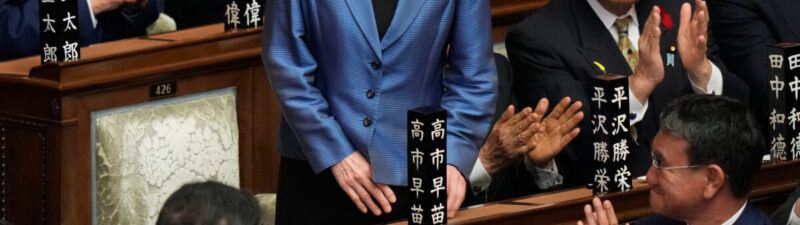
Communist Plot Targeting US Ally Stopped In Its Tracks
A startling new report from OpenAI reveals that a Chinese law enforcement–linked user attempted to weaponize American artificial intelligence to orchestrate an online smear campaign against Japan’s prime minister — only to be shut down and banned from the platform.
According to OpenAI’s February 2026 report, the individual tied to Chinese law enforcement sought to use ChatGPT in October 2025 to develop a covert influence operation targeting Japanese Prime Minister Sanae Takaichi. The model refused to assist with the request. However, the user continued submitting updates describing what they labeled “cyber special operations.”
OpenAI characterized those operations as broad digital campaigns aimed at silencing critics of the Chinese Communist Party (CCP) and foreign political leaders. The tactics described included deploying fake social media accounts, spreading fabricated information, filing fraudulent platform complaints, and conducting online harassment.
The alleged campaign against Takaichi followed her public condemnation of human rights abuses in Inner Mongolia. Takaichi, Japan’s first female prime minister and a vocal critic of Beijing, has taken an assertive stance on China-related security issues since assuming office in October. In November, she told a parliamentary committee that a Chinese invasion of Taiwan could threaten Japan’s survival. Shortly thereafter, a Chinese diplomat in Osaka posted — and later deleted — a message on X that reportedly threatened violence against her.
OpenAI says Chinese cops used ChatGPT to plan and track smear ops against opponents https://t.co/RXRrGbn6az
— The Register (@TheRegister) February 25, 2026
According to OpenAI’s findings, the operation targeting Takaichi sought to flood social media platforms with hostile narratives, use fabricated accounts posing as foreign residents to influence Japanese politicians, and portray her as a far-right extremist. Although ChatGPT declined to assist, OpenAI’s open-source review identified similar hashtags and AI-generated memes circulating on X, YouTube, and Blogspot, suggesting the campaign proceeded using other tools.
The banned user also claimed that at least 300 operators in a single Chinese province were engaged in similar efforts, with comparable activity occurring elsewhere. The report said the operators relied on domestic AI models such as DeepSeek and Qwen for translation, content generation, and monitoring.
Beyond Takaichi, the user described targeting Chinese dissidents abroad, including the widely followed X account “Teacher Li,” activist Hui Bo, and the human rights group Safeguard Defenders. Tactics allegedly included impersonation accounts on Bluesky and forged documents purportedly from a U.S. county court.

OpenAI noted that the activities described align with a 2023 U.S. Department of Justice case charging Chinese officers with orchestrating harassment campaigns against dissidents overseas.
Despite the scale of the claimed operation, its effectiveness appeared limited. According to OpenAI, YouTube videos linked to the anti-Takaichi effort received single-digit views, and fewer than 150 out of more than 50,000 posts reportedly generated meaningful engagement. However, the user claimed that some targeted dissidents experienced account suspensions, follower losses, or reduced activity.