
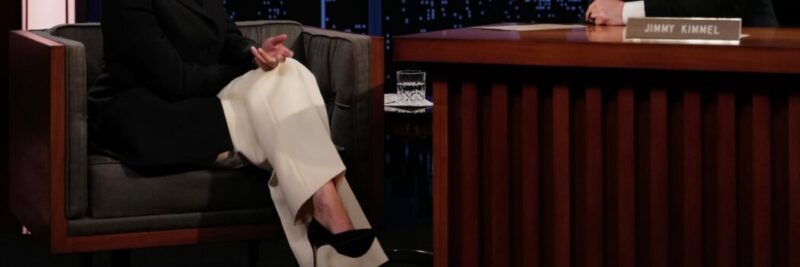
Kamala Makes Cameo On The Jimmy Kimmel Show
Kamala Harris is back — and she’s not tiptoeing into 2028. If the whispers in Democratic circles hadn’t turned into a full-throated murmur before, they certainly have now.
This week marked a deliberate shift in posture for the former vice president. After months of maintaining a low profile and fielding quiet concerns from Democratic donors and operatives, Harris made her intentions clear without saying the words outright. The message: she's not done, and she has no intention of fading quietly into political retirement.
What’s unfolding is a methodical — and unmistakable — soft launch of a 2028 campaign.
Her book tour, centered around "107 Days," a retrospective on her short-lived 2024 run, has been retooled and expanded. The timing and locations tell a deeper story than the content of the book itself. New tour stops include early primary powerhouses like South Carolina and voter-rich, majority-Black cities like Detroit, Memphis, and Jackson. These are not random selections. They are targeted moves into the core terrain of the Democratic base — especially the Black voters who helped secure Biden’s nomination in 2020 and remain a cornerstone of any serious Democratic campaign.
Then came her high-profile appearance at the Democratic National Committee’s winter meeting in Los Angeles. While other would-be contenders — Gavin Newsom, JB Pritzker — made strategic appearances or headlined fundraisers, it was Harris who seized the spotlight, delivering a speech that broke noticeably from her previous script.
Kimmel: Why didn’t the Biden/Harris admin release the Epstein files?
Kamala: "Perhaps to our damage we strongly and rightly believed that there should be an absolute separation between what we wanted as an administration and what the Department of Justice did."
What? pic.twitter.com/A2xiKKIWVx
— Western Lensman (@WesternLensman) December 18, 2025
Gone was the defensive loyalty to the Biden record. In its place: a broad critique of the system itself. "Both parties have failed to hold the public’s trust," Harris said — a stark line for someone who sat at the highest level of Democratic leadership for four years. She called the government “fundamentally unable” to meet people’s needs and warned against nostalgia for a “flawed system.” In that moment, Harris was not auditioning to be the next Biden. She was positioning herself as something else entirely — the anti-status quo candidate in a party that often resists change until forced.
And it resonated. Axios reports that when Harris spoke about “the future,” someone in the room shouted, “You!” The crowd knew exactly what she was hinting at.
Behind the scenes, her team is playing the long game. Spokesperson Kirsten Allen framed Harris’s 2026 plans as grounded in listening tours and engagement, not campaign slogans. But every stop, every appearance, and every shift in tone speaks volumes.
Meanwhile, her rivals aren’t sitting still. Newsom remains a major presence, with polls placing him as a top-tier contender. Pritzker is bringing in cash and building donor relationships. But for now, Harris is the only one openly testing the waters — blending visibility with rhetorical recalibration and leaning heavily into the political capital she still holds among key demographics.
The numbers, for what they’re worth at this stage, offer mixed signals. Harris holds a consistent edge over Newsom in Morning Consult surveys, and even shows a slight advantage against Vice President JD Vance in hypothetical matchups. Yet in New Hampshire, a traditional early state, she trails both Newsom and Pete Buttigieg — a warning that while she commands name recognition and loyalty in parts of the party, her path isn’t without resistance.

Still, Harris is betting that what the party wants in 2028 isn’t just continuity — but contrast. If that’s true, her evolution from cautious vice president to system-challenging reformer may be exactly what the base is waiting for.