
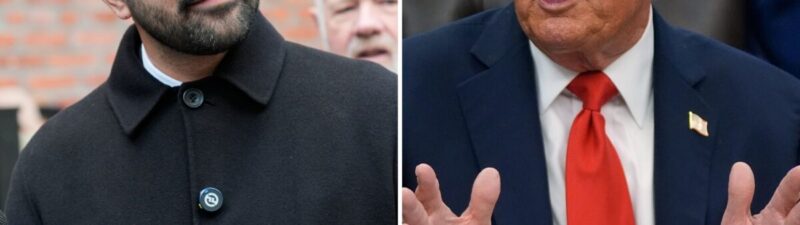
President Trump Tells Mayor Mamdani How To Improve NYC
On his 100th day in office, New York City Mayor Zohran Mamdani received a three-point review from President Donald Trump, who framed his advice in blunt, practical terms: cut taxes, clean up the city, and crack down on crime. The tone was direct, but notably absent was the kind of personal escalation that has defined past exchanges between the two.
Trump’s first point was economic. High taxes, he warned, risk driving residents and businesses out of the city. In his view, the equation is simple—lower the burden or watch people leave. It’s a familiar argument, but one he emphasized as the foundation for any broader recovery.
The second focused on appearance and upkeep. Trump described parts of Manhattan as deteriorating and said the city needs to be “cleaned up” and made to “sparkle.” It’s a line that leans as much on perception as policy, suggesting that how the city looks plays a role in how it’s experienced—and judged.
The third point turned to public safety. Trump urged Mamdani to work with the federal government to address crime, offering assistance rather than criticism on that front. It was one of the few moments where the comments shifted from critique to something closer to an open door.
What makes the exchange unusual is the relationship behind it. Despite trading barbs during the mayoral campaign—Trump calling Mamdani a “Communist,” Mamdani labeling Trump a “fascist”—the two have maintained a working line of communication. They’ve met in person, including a February Oval Office sit-down where Mamdani pitched a $21 billion housing proposal tied to development in Queens.
That proposal reportedly drew a positive reaction from Trump at the time, highlighting a pragmatic overlap between the two on certain issues, particularly housing and infrastructure. It’s a dynamic that doesn’t erase their political differences but complicates them.
Even as Mamdani continues to use charged language in interviews, Trump has shown a willingness to engage without revisiting those labels directly. When prompted about the mayor’s past comments, he brushed past them, even joking about the situation during a joint appearance.
The result is a relationship that operates on two tracks at once: public disagreement paired with private coordination. Trump’s three recommendations fit squarely into that pattern—critical, but framed as advice rather than attack.
Whether Mamdani takes any of it on board remains to be seen. But at the 100-day mark, the message from Trump was clear and narrowly focused: fix the fundamentals, or risk watching the city continue to slip.