
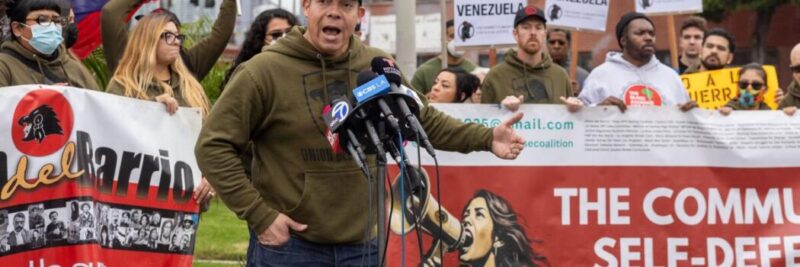
Protests Take Place During Maduro Court Appearance
In a scene that looked more like a cinematic reckoning than a courtroom routine, Nicolás Maduro and his wife, Cilia Flores, were delivered in an armored police vehicle to face charges in New York City—an extraordinary turn for a man who has clung to power through intimidation, manipulation, and sustained economic collapse in Venezuela. The charges? Drug conspiracy and weapons violations. But the larger indictment may be against a legacy of repression and systemic cruelty that has left Venezuela ravaged and millions displaced.
Once inside the courtroom, Maduro made a spectacle of himself, claiming he had been “kidnapped”—a claim as theatrical as it is ironic. For years, this regime has kidnapped dissidents, silenced journalists, and dismantled democratic institutions. Now, faced with the consequences of his own actions, Maduro invokes the very language of victimhood he long denied his own people.
HOLY SH*T!
Venezuelans in NYC confront paid leftist protesters, chanting:
“Get out! Get out!”
“We’re here by choice. We’re not getting paid!” pic.twitter.com/0VxN67axph— I Meme Therefore I Am (@ImMeme0) January 5, 2026
The scene outside the courthouse was just as volatile. Predictably, a crowd of leftist protesters rallied in support of the deposed strongman. Their chants and signs dripped with ignorance, with one protester—a Brooklyn native—bizarrely insisting Maduro was “rightfully elected twice by the people of Venezuela in a very transparent election.” That statement might have held water in a fantasy novel, but not in the lived history of Venezuelans who endured the fraudulent votes, jailed opposition leaders, and widespread censorship.
But the real voice of truth came from the Venezuelan diaspora itself.
They weren’t having it.
From across New York, Venezuelans who had lived through the brutality showed up in force to call out the delusions of the pro-Maduro apologists. Their words cut through the air like sirens of moral clarity. “They are not Venezuelans,” one woman declared. “They don’t speak Spanish!” These weren’t rehearsed talking points; this was righteous fury from people who fled tyranny and watched their homeland decay into chaos under Maduro’s iron grip.
“You don’t even know where Venezuela is!” shouted Dario Blanzo, Cuban-born and infuriated at the performative ignorance on display. And when Rafael Escalante said, “We are here to make sure the story is told by Venezuelans,” it was more than a statement—it was a line in the sand.

What unfolded wasn’t just a clash of protesters. It was a collision between fantasy and reality, between propaganda and lived experience. The applause and jeers, the chants and curses—it was raw democracy on display, where truth doesn’t need a podium, just a voice.
For millions of Venezuelans watching from afar, this moment isn’t just about Maduro facing justice in a U.S. courtroom. It’s about being seen. It’s about vindication.
And maybe—just maybe—it’s the start of something bigger.