
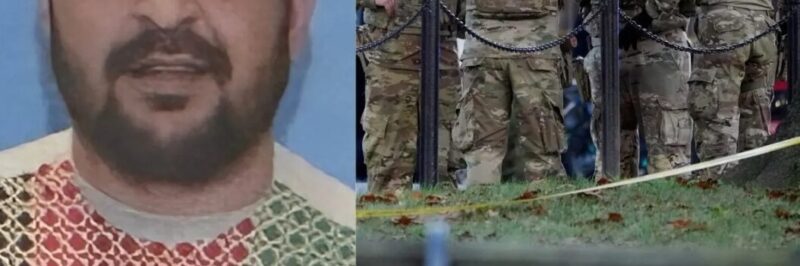
Report On Alleged Shooter Stirs Debate
It’s one of those moments when the national conversation splits sharply between right and wrong—and The Washington Post somehow still manages to pick wrong.
On Thanksgiving Eve, a horrifying and indefensible act took place in Washington, D.C. Rahmanullah Lakanwal, an Afghan national who had overstayed his visa, opened fire on two young members of the National Guard: Andrew Wolfe, 24, and Sarah Beckstrom, 20. Wolfe survived. Beckstrom didn’t. The 20-year-old died the next day from her wounds.
For most Americans, that’s the story. A foreign national in the country illegally murdered a U.S. service member on American soil. It’s a tragedy, full stop. But for The Washington Post, it was the beginning of a sympathy tour.
Rather than focus on Beckstrom’s life, or on the national security implications of this avoidable tragedy, the Post gave its platform to anonymous “former commanders” and vague stories of struggle and adjustment. The same media machine that was all too happy to smear Secretary of War Pete Hegseth for authorizing lethal force against narco-terrorists in the Caribbean now bends over backward to humanize a man charged with murdering a member of the National Guard.
The press has transitioned to “the terrorist had it rough” for the DC National Guard shooting suspect. https://t.co/j6Oeu2Vy8d
— Drew Holden (@DrewHolden360) December 1, 2025
Why? Because the narrative must be preserved. And in that narrative, violent individuals who shouldn’t be here in the first place are somehow victims of circumstance, while the actual victims—like Sarah Beckstrom—are mentioned only briefly before the conversation pivots back to “context.”
Here’s a bit of context they left out: Lakanwal wasn’t vetted. He came in under the Biden administration’s chaotic and rushed withdrawal strategy, during which tens of thousands of Afghans were airlifted to the United States without proper processing. The Trump administration and military experts warned about it then. Now, we’re witnessing the consequences in blood.
What The Post offers instead is a paragraph count’s worth of rationalization. We’re told Lakanwal struggled to find work. He didn’t want entry-level jobs. He had a hard time adjusting to life in the U.S. after serving in an elite military unit in Afghanistan. None of this changes what he did—nor should it. These excuses read like an attempt to blur moral lines that shouldn’t be blurred.
The American people are tired of this. Tired of watching institutions rush to excuse or “explain” away violence so long as it aligns with a particular ideological framework. Tired of seeing the media try to soften the image of killers. Tired of watching justice take a back seat to agenda.
And no, there is no “more complex tale.” A man overstayed his welcome in this country and murdered an American soldier. It doesn't require a graduate thesis or sociological analysis. It requires justice.
There’s a reason Americans no longer trust legacy media—and it’s exactly this.