
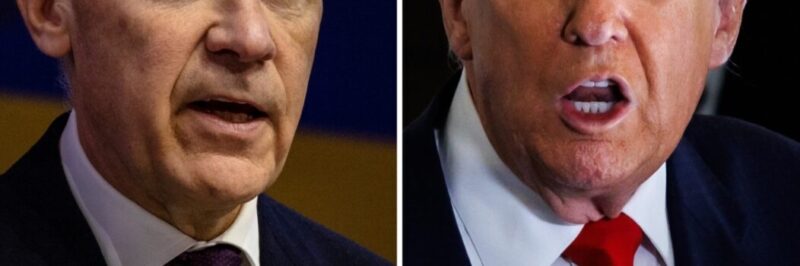
Report States Carney Apologized To Trump
Diplomatic tensions between the U.S. and Canada flared again this weekend — not over trade deals or border disputes, but over a 37-year-old radio address by Ronald Reagan. Yes, really.
Canadian Prime Minister Mark Carney publicly confirmed Saturday that he had apologized to President Donald Trump after an ad — funded by Ontario Premier Doug Ford — aired across major U.S. networks, using Reagan’s 1987 words to slam Trump’s tariffs on Canada. The ad, which critics say took Reagan’s anti-protectionism remarks wildly out of context, portrayed Trump’s America First trade policy as economically reckless and ideologically un-Reaganesque.
The White House wasted no time firing back. The response? Escalated tariffs — an immediate 10% hike on Canadian imports — and a sharp halt to ongoing trade talks.
Carney, speaking from South Korea after an Asia-Pacific summit, admitted that the commercial was a political misstep. “I did apologize to the president,” he said, revealing that the apology was delivered face-to-face during a state dinner hosted by South Korea’s president. Trump, ever attuned to tone, told reporters Carney was “very nice” and “gracious.”
What makes this saga particularly thorny is Carney’s own admission that he had opposed the ad from the start. He had reviewed it alongside Ford — who proudly commissioned it — and objected to its release. But Ford, no stranger to political theatrics, pushed forward anyway. “The best ad I ever ran,” he reportedly told Newsweek, brushing off the White House blowback.
That blowback was fierce. Trump took to Truth Social to accuse Canada of “cheating,” and accused them of misrepresenting Reagan’s views. “They fraudulently took a big-buy ad saying that Ronald Reagan did not like tariffs, when actually he LOVED TARIFFS FOR OUR COUNTRY,” Trump wrote.
The Reagan Foundation weighed in as well, accusing the Canadians of using “selective audio” to mislead viewers about the late president’s position. It's a rare rebuke from the keepers of Reagan's legacy — and it adds weight to the White House’s claims of misrepresentation.
In a broader strategic context, Carney’s misstep comes at a sensitive moment in U.S.-Canada relations. With tensions still simmering from trade disputes during Trump’s first term, Carney’s Asia trip was meant to signal Canada’s pivot away from overreliance on its southern neighbor. “It can’t happen overnight, but we’re moving very fast,” he said, after meeting with Chinese President Xi Jinping in an effort to diversify trade partnerships.
But the Reagan ad debacle has added a new layer of complexity to that shift. At a moment when Canada is trying to recalibrate its global alliances, it finds itself once again entangled in American domestic politics — this time by reviving Cold War-era rhetoric to critique a president.
Carney’s attempt to distance himself from the ad may play well to diplomatic audiences, but the damage is done. Tariffs are up. Trust is down. And the message from Washington is clear: don’t wrap your political messaging in the Gipper’s legacy unless you’re prepared for the blowback.