
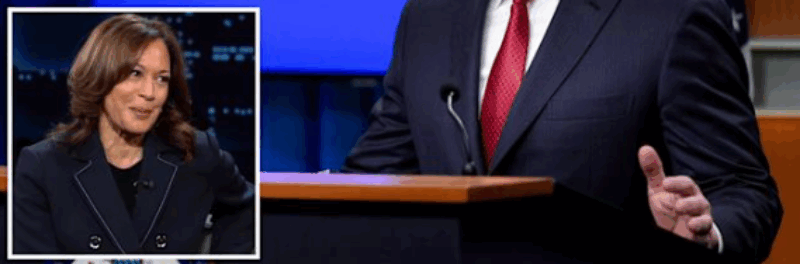
Rubio Comments On Harris Statement
In the wake of Nicolás Maduro’s capture in a high-risk U.S. special forces operation, the usual political battle lines have hardened — but this time, the fault lines expose a deeper fracture in Democratic credibility.
While the Trump administration is being praised in many quarters for its decisive and daring removal of a dictator long sought by U.S. authorities, top Democrats — including Kamala Harris — are scrambling to rewrite their own records on Maduro, and not without embarrassment.
At the heart of the backlash is a simple contradiction: Democrats once called Maduro a tyrant, demanded accountability, and even supported bounties on his head. Yet now, with Maduro in U.S. custody facing federal narco-terrorism charges, those same voices are suddenly crying foul. Why?
Secretary of State Marco Rubio framed the divide starkly during Sunday interviews. “In the Biden administration, they had a $25 million reward for [Maduro’s] capture,” Rubio said. “So, we have a reward for his capture, but we’re not going to enforce it?” The logic speaks for itself. You either treat Maduro as a threat or you don’t. Trump did.
The mission itself — dubbed Operation Absolute Reserve — was nothing short of extraordinary. U.S. forces reportedly breached one of the most secure military compounds in South America, Ft. Tiuna, and conducted coordinated precision strikes across the capital. The incursion lasted just two and a half hours.
Not a single American life was lost. And yet, former Vice President Kamala Harris immediately took to social media to denounce the action as “unlawful” and “unwise,” likening it to wars for oil and labeling Trump a regional strongman.
But Harris’s criticism quickly began to ring hollow. Her accusations didn’t square with the facts: this wasn’t about seizing oil, but seizing a fugitive. The U.S. does not need Venezuela’s oil — it needs to keep it out of the hands of regimes aligned with U.S. adversaries. Rubio made that clear, and so did Trump, who framed the mission as a necessary assertion of American strength in the Western Hemisphere.

Even more awkward were the statements from figures like Sen. Chris Murphy, who on Sunday condemned the raid as an “illegal war” — only to be reminded of his 2019 op-ed where he wrote, “There should no longer be any debate about Maduro’s lack of democratic legitimacy.” That’s the problem: Democrats have spent years branding Maduro as an illegitimate, oppressive narco-dictator. But when he’s finally brought to justice, their reflex is not to celebrate — but to deflect.
There’s a reason for that dissonance. Trump succeeded where they failed. For all the rhetoric and hollow threats during the Biden years, there was no action. No plan. No enforcement. Just diplomatic theater. Trump’s action, in contrast, was fast, targeted, and successful. And now that Maduro and his wife, Cilia Flores, sit in a Brooklyn detention center awaiting federal arraignment, critics are left explaining why they opposed a mission that achieved precisely what they once claimed to support.
In the end, Trump didn’t just remove a dictator. He exposed the inconsistencies, hesitations, and contradictions of his critics. The American people saw strength, clarity, and action. His opponents, once again, were left holding the bag — and their own receipts.