

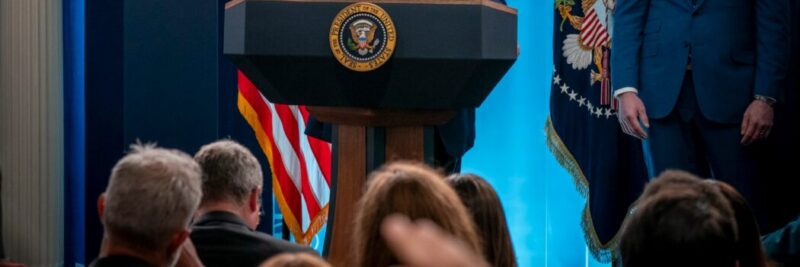
Trump Has Perfect Response To Reporters Question About God
There’s a certain rhythm to moments like this—where geopolitics, religion, and presidential rhetoric all collide in a single exchange. What could have been a narrow policy question quickly turned into something broader, more philosophical, and, in typical Trump fashion, more personal.
The question itself wasn’t unusual on its face: does God support the United States in a conflict with Iran? But it’s the kind of question that forces a president into territory that’s hard to navigate cleanly. Answer too directly, and it risks sounding like divine endorsement of war. Deflect, and it can come off as evasive. Trump didn’t sidestep it—he leaned in.
“I do, because God is good.”
That answer reframes the premise. Instead of claiming God is aligned with a nation, he shifts to a more general assertion: that God supports outcomes where people are protected and suffering is reduced. It’s less a theological claim about America’s position and more an attempt to ground U.S. actions in a moral framework, at least rhetorically.
But Trump doesn’t stay in that lane for long.
Within moments, the focus pivots from divine intent to his own record. Ending wars, saving lives, references to Nobel Peace Prize conversations—it becomes a familiar pattern. Faced with a question about moral justification, he answers in part by pointing to outcomes he credits himself with achieving. Whether those claims are accepted or disputed, the structure of the response is clear: legitimacy comes not just from principle, but from results.
There’s also an undercurrent running through the exchange that’s easy to miss if you only focus on the headline line about God. Trump repeatedly insists he does not enjoy conflict—“I don’t enjoy this”—a point he emphasizes more than once.
That insistence serves a purpose. It positions the current situation with Iran as something forced, not chosen, even as he pairs it with examples of conflicts he says he has helped resolve elsewhere.
What makes the exchange stick isn’t just the content—it’s the layering. A question about God becomes a statement about morality, which becomes a defense of policy, which becomes a recap of personal achievements. By the end, the original question is still there, but it’s been folded into something much larger: a narrative about intent, responsibility, and how a president wants his actions to be interpreted in the middle of an active conflict.