
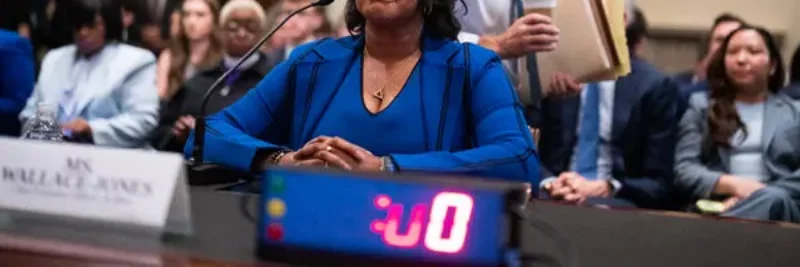
ActBlue CEO Called Before Congress
ActBlue CEO Regina Wallace-Jones is set to face intense scrutiny from House lawmakers Wednesday as a long-running Republican investigation into the Democratic fundraising platform reaches a critical stage. The hearing comes amid allegations that ActBlue may have provided inaccurate information to Congress regarding its donor verification and fraud prevention practices.
In a dramatic development just hours before the hearing, Wallace-Jones announced in an op-ed published by The Washington Post that she intends to invoke her Fifth Amendment right against self-incrimination when questioned by lawmakers. The decision immediately escalated the political stakes surrounding a probe that has been building for more than two years.
Wallace-Jones' appearance before the House Administration Committee marks the first time she has publicly addressed the allegations. The committee, led by Chairman Bryan Steil, R-Wis., has been investigating ActBlue since 2023, focusing on how the organization screens donations and whether foreign money may have entered American political campaigns through its fundraising platform.
Federal law generally prohibits foreign nationals from contributing to federal and state political campaigns, making donor verification a critical issue for any major fundraising operation.
Representatives for ActBlue have consistently denied making false statements to Congress and have characterized the investigation as politically motivated. Nevertheless, Republican lawmakers have continued expanding their inquiry following reports that raised questions about discrepancies between the organization's public statements and its internal procedures.
Earlier this year, The New York Times reported that ActBlue's former outside counsel warned Wallace-Jones that certain statements made to congressional investigators regarding anti-fraud measures may not have accurately reflected how those systems operated in practice. According to the report, attorneys found that some donor screening safeguards described to Congress were not always being followed as outlined.
The report further stated that ActBlue updated aspects of its fraud prevention procedures internally but did not immediately notify congressional investigators of those changes. The organization later acknowledged strengthening certain anti-fraud measures in a June 2025 letter to the House Administration Committee.
Republicans have seized on those developments.
Steil argued this week that discrepancies between ActBlue's statements and its internal practices may have been an effort to avoid negative attention as congressional scrutiny intensified.
"The goal of this investigation remains the same: to ensure that federal law effectively stops bad actors, including foreign actors, from making political donations to American candidates and campaigns through online fundraising platforms," Steil wrote in a letter accompanying the subpoena issued to Wallace-Jones.

The hearing is expected to feature questioning not only from members of the House Administration Committee but also from House Judiciary Committee Chairman Jim Jordan, R-Ohio, and House Oversight Committee Chairman James Comer, R-Ky., both of whom have been involved in examining ActBlue's operations.
The investigation has already produced significant controversy. According to committee officials, five current and former ActBlue employees invoked their Fifth Amendment rights a combined 146 times during previously subpoenaed testimony.
Meanwhile, congressional investigators have broadened their focus to include ActBlue's board of directors. Earlier this month, Steil requested interviews with five board members and sought extensive internal documents related to the organization's response to congressional inquiries and reports of internal turmoil.
The controversy intensified after reports emerged describing concerns raised by unions affiliated with ActBlue. According to The New York Times, union representatives warned board members about what they described as a growing pattern of instability within the organization, including allegations involving retaliation against a whistleblower.