
Adam Schiff’s AI Political Parody Outrage Backfires
Few politicians in Washington have spent as much time accusing others of dishonesty as California Sen. Adam Schiff. That makes his latest legislative effort an especially striking one.
Schiff has introduced two bills aimed at tightening rules governing political campaigns. One would expand existing restrictions on campaign impersonation by addressing political content generated through artificial intelligence. The other would require campaigns to disclose payments made to social media influencers who promote candidates online, adding another layer of transparency beyond current federal rules that already require influencers themselves to disclose paid relationships.
On paper, the proposals are presented as measures designed to protect voters from deceptive political messaging.
Critics, however, see a glaring irony.
Schiff's reputation has long been defined by his role in some of the most contentious political battles of the Trump era, particularly the investigations surrounding President Donald Trump and the first impeachment proceedings.
One episode continues to follow him years later.
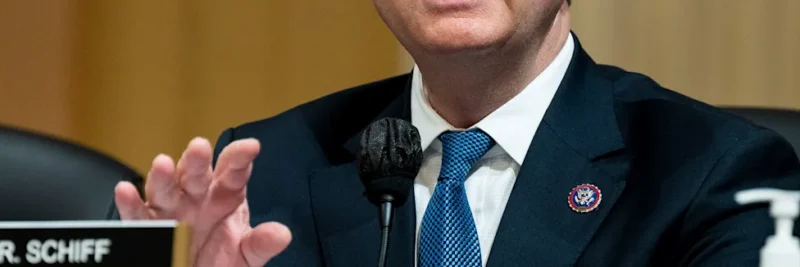
During a 2019 House Intelligence Committee hearing, Schiff summarized a phone call between Trump and Ukrainian President Volodymyr Zelenskyy using language that was not part of the actual transcript. After Republicans accused him of fabricating the conversation, Schiff responded that his remarks were intended as "parody."

Supporters viewed the exchange as rhetorical shorthand. Critics argued that presenting fictional dialogue during an official congressional hearing crossed a line, especially given the seriousness of the impeachment inquiry.
That history has become central to criticism of Schiff's new legislation.
Opponents argue that a lawmaker who once defended placing words in a political opponent's mouth is now attempting to regulate similar conduct when it appears in campaign advertising.

The timing of the legislation also reflects recent campaign tactics in California.
According to the San Francisco Chronicle, Los Angeles mayoral candidate Spencer Pratt relied heavily on artificial intelligence-generated videos during his campaign against Mayor Karen Bass. One video portrayed Bass as the Joker while depicting Pratt as Batman fighting crime. Another featured AI-generated women discussing why they planned to vote for Pratt after attending a Pilates class.
Those advertisements helped draw renewed attention to the growing role of artificial intelligence in modern political campaigns and appear to have helped motivate Schiff's proposal.
His second bill addresses another evolving aspect of campaigning: paid social media endorsements.
Current federal law requires influencers to disclose when they have been compensated to promote political candidates. Schiff's proposal would extend that requirement by making campaigns publicly disclose those payments as well.
The Chronicle reported that the measure follows the increasing use of influencers during recent California campaigns, including billionaire Tom Steyer's unsuccessful gubernatorial bid.
For Schiff's critics, however, the substance of the bills is overshadowed by the messenger.
They point to his repeated claims during the Russia investigation that evidence of collusion involving Trump was "in plain sight," assertions that remained a source of political controversy after years of investigations produced sharply differing interpretations of the evidence and conclusions.
His detractors also cite his prominent role during impeachment proceedings and his service on the House committee that investigated the events of Jan. 6, 2021, arguing that he has consistently approached politically charged investigations from a partisan perspective.
Whether those criticisms are fair or not, they explain why Schiff's latest push for stricter rules governing political truthfulness has generated skepticism well beyond Republican circles.