

Democrats' 6th Attempt To Limit Trump Fails
A tense standoff in the Senate over U.S. involvement in Iran is approaching a critical deadline, with Democrats once again unable to break Republican unity behind President Donald Trump’s handling of the conflict.
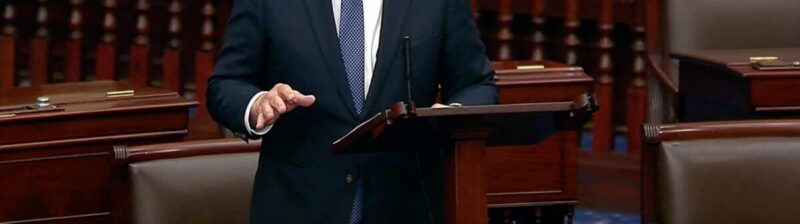
In what marks the sixth failed attempt, Senate Democrats pushed a resolution aimed at limiting the president’s war powers and forcing a halt to military engagement. Led by Sen. Adam Schiff, the effort came just days before the 60-day deadline that requires Congress to either authorize continued military action or mandate its end. That deadline arrives as lawmakers prepare to leave Washington for a weeklong recess, effectively narrowing any remaining window for action.
Schiff argued that last-minute discussions among some Republicans about drafting an Authorization for the Use of Military Force fall short of what’s required. With no clear path for passage through both chambers and presidential approval in such a short timeframe, he dismissed the effort as impractical.
Republicans, however, have largely held the line, maintaining that the president retains authority to continue operations beyond the deadline. Their interpretation includes a 30-day window traditionally intended for winding down military involvement, though critics argue it is not meant to sustain active combat.
So far, the situation on the ground has not escalated further, with a ceasefire extension still holding. That has reduced immediate pressure for Congress to act, and Senate Majority Leader John Thune has signaled no urgency to bring an authorization vote to the floor. Instead, he indicated that members are relying on ongoing briefings from military leadership before making any decisions.
Meanwhile, scrutiny over the conflict intensified during recent Capitol Hill hearings featuring Secretary of War Pete Hegseth. Originally scheduled to address the Pentagon’s $1.5 trillion budget proposal, the hearings quickly shifted focus to the war itself. Lawmakers pressed Hegseth on strategy, oversight, and costs, with one key figure emerging: an estimated $25 billion spent so far.
Democrats have challenged that number, arguing both that the true cost may be higher and that the funds could be redirected toward domestic economic concerns. Senate Minority Leader Chuck Schumer sharpened that criticism, placing responsibility for the conflict squarely on the administration and describing both the president and defense leadership as barriers to a resolution.
With no legislative breakthrough in sight and the deadline imminent, Congress appears poised to sidestep a direct decision—for now—leaving the administration’s authority largely intact as the situation moves into its next phase.