

Former Minnesota Criminal Investigator Sheds New Light On Minnesota Fraud
The testimony out of Minnesota didn’t land quietly—it hit like a blunt instrument, raising questions that had been simmering for years and putting them directly into the spotlight.
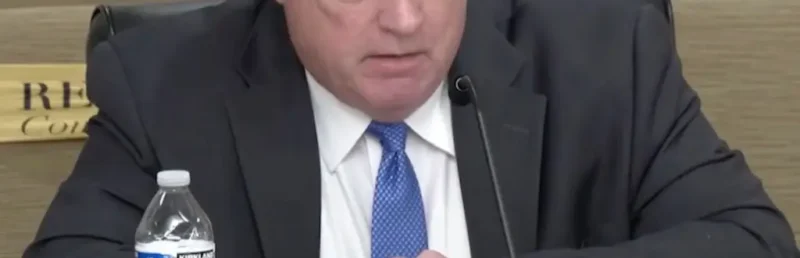
Jay Swanson, a former state trooper and criminal investigator for the Minnesota Department of Human Services, told lawmakers that his work uncovering fraud in the state’s child care assistance program wasn’t just ignored—it was actively suppressed.
According to his account, supervisors pressured him to walk back or even delete findings that pointed to widespread abuse of the system. At one point, he said, a senior official confronted him in his office, demanding he retract statements submitted to legislative auditors. Swanson pushed back, warning that doing so would violate the law.
What followed, he testified, was not a reconsideration—but escalation. He described an environment where investigators were undermined, their work questioned, and outside consultants brought in—at a cost of $90,000—to cast doubt on fraud findings despite lacking relevant expertise. The message, as Swanson presented it, was clear: the problem wasn’t just the fraud itself, but what happened when someone tried to document it.
The scope of that fraud is another piece of the story drawing attention. Swanson claimed that during his investigations, he encountered repeated assertions that Minnesota had gained a reputation—particularly in certain overseas communities—as a place where child care fraud was easier to carry out and more lucrative than in other states.
That claim, controversial on its face, was presented as something he heard directly in the course of interviews tied to his work.
As these investigations were unfolding, structural changes followed. According to Republican lawmakers, key oversight functions within DHS were scaled back or eliminated after Gov. Tim Walz took office, including units with the authority to conduct criminal investigations. Critics argue that these moves weakened the state’s ability to pursue fraud cases at a critical time.
Meanwhile, federal authorities have been moving in a different direction. Recent FBI raids targeting multiple child care centers signal a broader crackdown, with prosecutors estimating billions of dollars in fraudulent claims tied to Minnesota programs over time. Dozens of individuals have already been charged, and many convicted.
That contrast—state-level turbulence alongside federal enforcement—has sharpened the political clash. Walz has pointed to coordination between agencies as proof the system is working, while critics argue the federal action happened in spite of, not because of, state leadership.