
Here Is Mike Johnson’s Reason For Not Ejecting Democrats With ‘Shameful’ SOTU Behavior
Tuesday night’s State of the Union was filled with sharp rhetoric, partisan divides, and moments designed to energize both sides of the aisle. But one of the most consequential decisions may have come not from the podium—but from the Speaker’s chair.
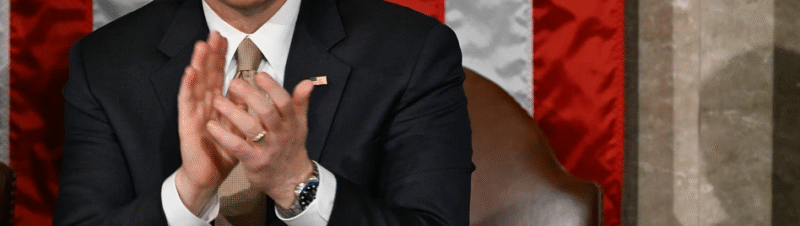
House Speaker Mike Johnson revealed afterward that he chose not to remove disruptive Democratic lawmakers during President Donald Trump’s address, saying he wanted the American people to witness what he described as a “shameful” display.
During the speech, Democratic Reps. Ilhan Omar of Minnesota and Rashida Tlaib of Michigan shouted at the president after he challenged members of Congress to stand if they believed the government’s first responsibility is to “protect American citizens, not illegal aliens.” While some Democrats remained seated, Omar and Tlaib vocally objected as Trump criticized lawmakers who declined to rise.
Johnson, speaking during Newsmax’s post-speech coverage, acknowledged that he likely had the authority to eject certain members for violating decorum. He opted not to.
“It was a very shameful display,” Johnson said. “There was a couple of times — there’s a couple of House members that I probably could have ejected from the chamber because of their behavior, but the president handled it so well. And I decided not to do that because I thought it would be better for the American people to see that, to see the shame that they were bringing upon themselves.”
The Speaker framed the decision as strategic rather than procedural. By allowing the disruptions to unfold, he suggested, voters could draw their own conclusions.
Johnson also criticized Democrats for what he described as selective applause and protest throughout the evening. He argued that they stood at moments he believes were politically advantageous while remaining seated during what Republicans characterize as bipartisan principles—such as prioritizing citizen safety.
“They stood at the wrong times, and they refused to stand when they should have,” Johnson said, referencing Democratic opposition to the Working Families Tax Cuts and their reaction during immigration-related remarks. “That video is going to be very valuable to us in the future.”
The political stakes are clear. Republicans have already signaled that footage from the address—particularly reaction shots—will feature prominently in campaign messaging ahead of the 2026 midterms. In a closely divided electorate, moments of visible dissent can become potent advertising material.
Another emotionally charged segment came when Trump highlighted the families of Laken Riley and Jocelyn Nungaray, both killed by individuals identified as illegal immigrants during the previous administration. Some Democrats did not stand during that portion of the speech, a fact Republicans have underscored as part of their broader argument on immigration enforcement.