

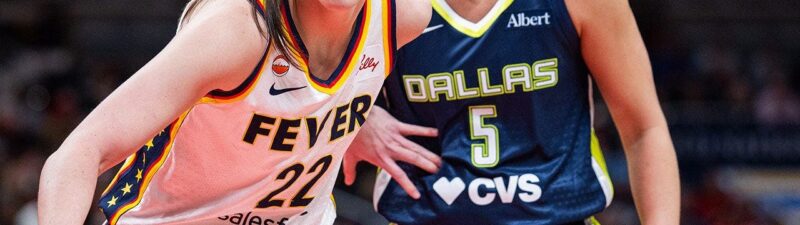
Media Outlet Corrects Caitlin Clark Article
Caitlin Clark has become one of the biggest names in sports, but she has also become one of the most polarizing. Her supporters see a generational talent who brought unprecedented attention to women's basketball. Her critics often argue that race has played a role in the extraordinary level of attention she receives. The debate has become a fixture of sports media, and this week it produced another controversy involving USA Today.
The broader argument has followed Clark since her college days. Some commentators have suggested that her popularity reflects racial dynamics within American sports, arguing that audiences who previously paid little attention to women's basketball embraced the game once a white superstar emerged. Others reject that explanation, pointing instead to Clark's record-breaking performances, long-range shooting, and dramatic style of play as the primary reasons for her rapid rise.
Statement from USA Today sports columnist Nancy Armour pic.twitter.com/wif3P9Yg82
— Joe Schad (@schadjoe) July 23, 2026
That debate resurfaced in dramatic fashion when USA Today columnist Nancy Armour published a column arguing that Clark should be more aware of how some members of her fan base respond when she is fouled during games.
Armour wrote that a "white nationalist element" exists within Clark's following and argued that some fans view her as a white woman who needs protection from Black opponents. She went further, referencing the 1955 lynching of Emmett Till and suggesting Clark should recognize the broader consequences of her actions when disputes arise on the court.
The comparison immediately generated intense criticism across social media and the sports world. Many readers viewed the historical analogy as wildly disproportionate to routine physical play in professional basketball. Armour later responded by saying that she had failed to provide enough context for the point she intended to make, but that explanation did little to quiet the backlash.
Before that controversy had even faded, USA Today found itself issuing another correction involving Clark.
Caitlin Clark skipped the WNBA Orange Carpet on Thursday, opting to get her hair done in her hometown of Des Moines. https://t.co/9z3qjCS7EU
— USA TODAY (@USATODAY) July 24, 2026
An article reported that the Indiana Fever star had skipped a WNBA All-Star Weekend fan event because she had returned to her hometown of Des Moines, Iowa, to have her hair styled. The story painted the absence as a personal decision tied to her appearance rather than league activities.

It soon became clear that Clark had actually attended an event benefiting the Caitlin Clark Foundation.
Her hairstylist posted photos from the appointment, showing Clark preparing for the charity event, and Clark herself commented on the images. USA Today subsequently updated the article, adding an editor's note stating that additional information had been included. The correction clarified that Clark had attended the foundation event rather than simply skipping league festivities for a salon appointment.
The sequence of events raised fresh questions about editorial standards.

What is wrong with the @USATODAY They are so blinded by their hatred of Caitlin Clark they cant even see straight. Pathetic excuses for humans and “journalists” Just stop talking about her already #boycottusatoday pic.twitter.com/uWrXCfS2Gm
— Dave Portnoy (@stoolpresidente) July 24, 2026
Critics argued that a basic fact check could have prevented the story from being published in its original form. Before characterizing Clark's absence as an apparent decision to prioritize a cosmetic appointment over league obligations, they contend that reporters or editors could have confirmed her schedule with representatives or verified where she actually was.
The timing only intensified those concerns. Coming immediately after the uproar surrounding Armour's column, the inaccurate reporting fueled accusations that Clark was being portrayed unfairly. What initially appeared to be a story suggesting she had skipped an official event for a personal errand instead became one about her participation in charitable work.