
US Gives Update On Ship Traffic
Iran is facing mounting economic pressure as its own senior officials publicly acknowledge problems with oil exports, access to foreign currency and the ability of the country to sustain itself through its conflict with the United States.
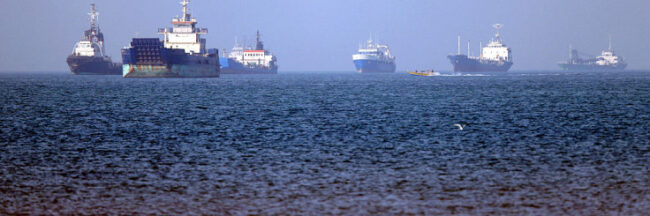
At the same time, shipping through the Strait of Hormuz has begun recovering. Vessel traffic has reportedly increased roughly 400 percent over the past several weeks as the United States helps ships navigate the area. Traffic remains below levels seen before the military confrontation, but the increase could weaken one of Tehran's most important sources of leverage: its ability to disrupt shipping through a waterway crucial to global energy markets.
The warnings coming from inside Iran are becoming increasingly explicit.
Iranian President Masoud Pezeshkian has argued that the war should end while Iran can still negotiate from what he described as a “position of strength and dignity.” He also appeared to criticize hardliners removed from the daily responsibilities of governing, referring to people “sitting outside the circle” who “do not know the state of the government.”
Other Iranian officials are talking just as openly about the economic danger.
Mohammad Bagher Ghalibaf, Iran's parliamentary speaker and chief negotiator, addressed the issue during a Friday visit to Iraq.
“No matter how strong we are militarily, if the people are hungry and we do not have financial circulation, economic growth and domestic production, we will not endure,” Ghalibaf said.

He followed that warning with another pointed observation.
“As someone who has experienced war, we understand the true value of peace.”
Perhaps the clearest indication of the pressure came from Iran's central bank governor, Abdolnaser Hemmati. Speaking on state television, Hemmati acknowledged that the American naval blockade had effectively halted Iranian oil exports.

“It is a reality that we are not exporting oil,” Hemmati said. “The Americans have frozen our foreign exchange reserves and do not allow us to access them.”
For a government heavily dependent on oil revenue, that presents an immediate financial problem. Iran needs foreign currency not only to support government operations but also to pay for imports.
The blockade is squeezing the other side of that equation as well by restricting products entering the country. The United Arab Emirates has added further pressure with its decision to impose an embargo on trade and financial transactions with Iran, cutting another channel Tehran has relied upon for commerce.