
Show Of Strength: Trump Puts China In Missile Range
The Indo-Pacific chessboard is shifting — and the pieces are getting heavier.
The United States is preparing to expand the deployment of advanced missile and unmanned systems in the northern Philippines, placing additional long-range strike capabilities within reach of key Chinese military assets. The move deepens Washington’s security partnership with Manila and sharpens its posture against Beijing’s growing assertiveness across the South China Sea and near Taiwan.
U.S. and Philippine officials confirmed plans to increase deployments of what they described as “cutting-edge missile and unmanned systems,” while issuing a joint condemnation of China’s “illegal, coercive, aggressive and deceptive activities” in disputed waters.
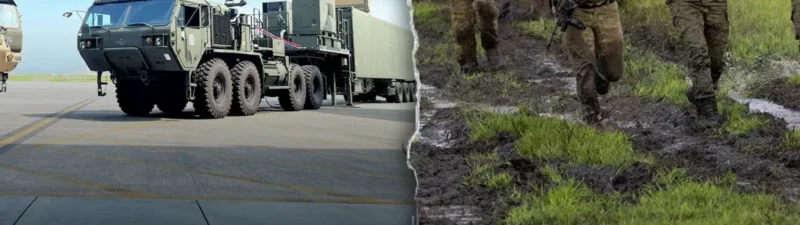
At the center of the strategy is the U.S. Army’s Typhon missile system, first deployed to northern Luzon in April 2024. The ground-based launcher can fire Tomahawk cruise missiles capable of traveling more than 1,000 miles.
From Luzon, that range places parts of southern China — along with major People’s Liberation Army facilities — within striking distance. It also enables coverage of vast sections of the South China Sea and critical maritime corridors linking it to the wider Pacific.
In 2025, the U.S. deployed the Navy Marine Expeditionary Ship Interdiction System to Batan Island in Batanes province. That location overlooks the Bashi Channel, a narrow but strategically vital waterway just south of Taiwan. The channel serves as a major transit route for both commercial shipping and military vessels moving between the South China Sea and the Western Pacific. In any Taiwan contingency, control of that passage would carry enormous weight.
Chinese officials have repeatedly objected. Embassy spokesperson Liu Pengyu warned that introducing “strategic and offensive weapons” heightens regional tensions and risks fueling an arms race. He insisted the United States has “no standing” in South China Sea disputes and reaffirmed Beijing’s unwavering stance on Taiwan, warning that any provocation crossing red lines would be met with “resolute countermeasures.”
Manila has rejected Beijing’s calls to withdraw the systems. Philippine Ambassador to Washington Jose Manuel Romualdez characterized the deployments as defensive and deterrent in nature, saying upgraded launchers under discussion could eventually be acquired by the Philippines itself. “It’s purely for deterrence,” he said, adding that Chinese actions have strengthened Manila’s resolve.
The expansion reflects a broader U.S. strategy along the so-called “first island chain” — a geographic arc stretching from Japan through Taiwan and the Philippines that forms a natural barrier to Chinese naval expansion into the Pacific. By dispersing mobile, land-based missile systems across allied territory, Washington complicates Beijing’s military calculations, adding ground-based threats to its existing air and naval capabilities.
China claims nearly the entire South China Sea despite a 2016 international tribunal ruling rejecting many of its claims. Clashes between Chinese and Philippine vessels near disputed shoals have grown more frequent, intensifying regional friction.