

State Dept Urges More Americans Abroad To Flee High Risk Areas
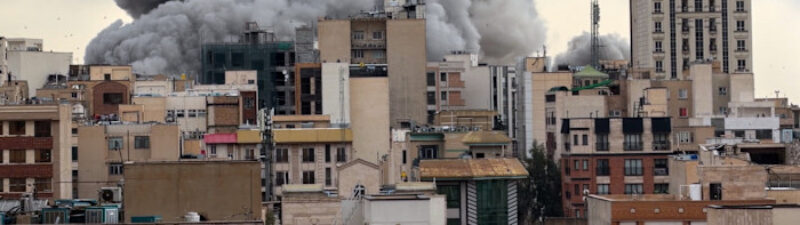
The State Department has issued one of its most sweeping emergency travel warnings in years, urging Americans to depart immediately from more than a dozen countries across the Middle East as the Iran war intensifies and security conditions deteriorate at a rapid pace.
Assistant Secretary of State for Consular Affairs Mora Namdar announced Monday that U.S. citizens should leave Bahrain, Egypt, Iran, Iraq, Israel, the West Bank and Gaza, Jordan, Kuwait, Lebanon, Oman, Qatar, Saudi Arabia, Syria, the United Arab Emirates and Yemen. The warning was blunt: serious safety risks are mounting, and the situation on the ground can shift with little to no notice.
For Americans seeking assistance, the State Department has activated round-the-clock support lines. Citizens abroad can call +1-202-501-4444, while those in the United States and Canada can dial +1-888-407-4747 for help arranging commercial departures.
Officials also urged Americans overseas to enroll in the Smart Traveler Enrollment Program (STEP) at step.state.gov, allowing embassies to push real-time security updates directly to travelers.
The evacuation push follows the U.S. military’s launch of Operation Epic Fury, a coordinated strike targeting Iranian command-and-control centers, air defense systems, and missile and drone launch sites. The operation marked a dramatic escalation in U.S. involvement and has triggered retaliatory threats across the region.
Conditions are described as volatile and fluid. In a Feb. 28 Worldwide Caution alert, the State Department warned Americans globally—especially those in the Middle East—to exercise heightened vigilance. Officials cautioned that airspace closures, transportation shutdowns, and sudden security incidents could disrupt travel with little warning.
Since Saturday, a cascade of alerts from U.S. embassies has reinforced the urgency. At least nine diplomatic missions—including Bahrain, Iran, Kuwait, the United Arab Emirates, Saudi Arabia, Iraq, Jordan, Qatar and Israel—have issued repeated shelter-in-place directives. In several instances, embassy personnel and their families were ordered to remain indoors. Americans in affected areas were advised to stay inside secure structures, avoid windows, and prepare for the possibility of incoming missiles or drones.
The danger is not theoretical. In Saudi Arabia, the U.S. Embassy in Riyadh temporarily closed Tuesday after two Iranian drones struck the building. No injuries were reported, but the incident prompted expanded shelter-in-place orders in Riyadh, Jeddah and Dhahran.
For now, the message from Washington is clear: if you are in the region and have the ability to leave safely, do so immediately.