
Trump Censures Israel For Unsanctioned Attacks
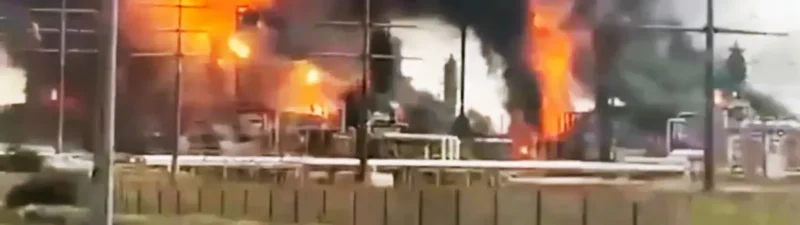
The latest escalation in the Middle East has introduced a new layer of volatility, as conflicting accounts and rapid retaliation threaten to widen an already unstable situation. At the center of the latest developments is an alleged Israeli strike on Iran’s South Pars Gas Field—one of the most critical energy assets in the world—and the sharp response that followed.
President Donald Trump moved quickly to distance the United States from the incident, stating unequivocally that Washington had no prior knowledge of the strike. He also emphasized that Qatar, which shares operational control of the massive gas field with Iran, had no involvement in the attack.
That clarification appears aimed at containing the diplomatic fallout, particularly after Iran reportedly retaliated by striking part of Qatar’s liquefied natural gas infrastructure under the assumption of complicity.
Trump’s statement reflects the fragile nature of information flow in active conflict zones, where misinterpretations can trigger rapid and consequential responses.
According to his account, Iran acted without full knowledge of the circumstances, leading to what he described as an unjustified strike on a third party. The implications of that miscalculation are significant, as it risks drawing additional regional actors into an already tense confrontation.
At the same time, Trump issued a stark warning regarding future actions. While declaring that no further Israeli attacks would occur under the current conditions, he outlined a severe response if Iran were to escalate further—particularly against Qatar. The warning signals both an attempt at de-escalation and a clear line that, if crossed, could result in overwhelming retaliation targeting critical infrastructure.
Complicating the situation are conflicting reports about coordination. While Trump maintains that the United States was not informed, an Israeli official cited in media coverage suggested that the strike had been coordinated with Washington. That contradiction raises questions about communication between allies and the extent of U.S. involvement, whether direct or indirect.
Meanwhile, Iran’s response has not been limited to immediate retaliation. Statements from senior figures within the Islamic Revolutionary Guard Corps indicate a broader shift in targeting strategy, suggesting that energy infrastructure linked to the United States could now be considered legitimate targets alongside military bases. Such a posture significantly raises the stakes, expanding the potential scope of the conflict beyond traditional ռազմական objectives.