

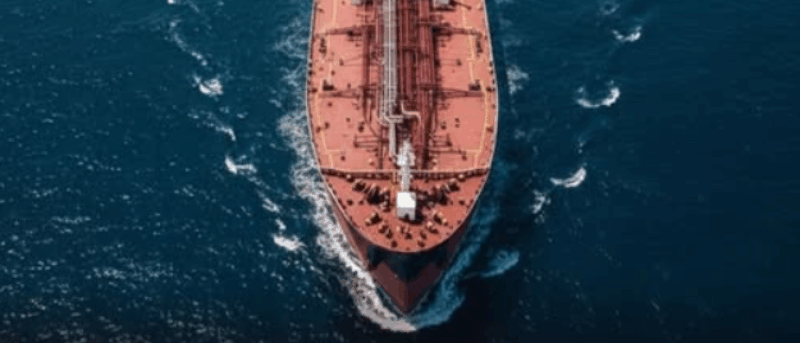
US Forces Board and Seize Tanker
In a daring and precision-timed operation on Wednesday, the United States — with critical support from British military forces — intercepted and seized a rogue Russian-flagged oil tanker in the North Atlantic, marking a dramatic escalation in President Donald Trump’s international pressure campaign against illicit oil smuggling tied to Venezuela, Iran, and Hezbollah.
The vessel in question, once known as the M/V Bella I and later rebranded the Marinera under the Russian flag, had eluded authorities for weeks. After refusing boarding in the Caribbean last month, the ship made a high-stakes dash across the Atlantic, painting a Russian flag on its hull and reflagging in an apparent attempt to evade capture. It didn’t work.
The U.S. Coast Guard, backed by U.S. European Command and assets from the UK Royal Air Force, executed a commando-style boarding that brought the vessel’s transatlantic run to an end. The mission, conducted in international waters, is already being hailed as a model of multinational enforcement precision.
In two predawn operations today, the Coast Guard conducted back-to-back meticulously coordinated boarding of two “ghost fleet” tanker ships— one in the North Atlantic Sea and one in international waters near the Caribbean. Both vessels —the Motor Tanker Bella I and the Motor… pic.twitter.com/EZlHEtcufX
— Secretary Kristi Noem (@Sec_Noem) January 7, 2026
Homeland Security Secretary Kristi Noem confirmed that the Bella I was one of two “ghost fleet” tankers seized on Wednesday in back-to-back operations. The other, the Sophia, was intercepted near the Caribbean. Both ships, Noem said, were linked to Venezuela and part of a network known for skirting U.S. sanctions. The Bella I, in particular, has a documented history of transporting Iranian oil and was previously sanctioned by the U.S. in 2024 for smuggling cargo linked to Hezbollah — the Iran-backed terrorist organization.
U.S. officials confirmed that the Bella I was empty at the time of seizure, but its record spoke volumes. The ship had become emblematic of the so-called “shadow fleet” — a network of stateless, reflagged, or falsely flagged tankers used to bypass international sanctions regimes and prop up outlaw regimes from Caracas to Tehran.
British Defence Secretary John Healey emphasized the broader strategic implications, describing the operation as part of an “axis of sanctions evasion” that spans from the Middle East to Ukraine. “This ship, with a nefarious history, is part of a Russian-Iranian axis… fuelling terrorism, conflict, and misery,” Healey stated in a BBC interview, vowing that the UK would continue to assist in dismantling shadow fleet operations that endanger global security.
U.S. intelligence sources confirmed that military aircraft had tracked the ship’s movements and that the operation had been in the works for over two weeks. In the face of growing Russian naval interference, including an escort of vessels and a submarine reportedly deployed to protect the Marinera, the U.S. and UK forces acted decisively.
This latest seizure comes as President Trump ramps up pressure on Venezuela’s oil industry, seeking not only to cut off illegal revenue streams but also to redirect Venezuelan oil toward legitimate markets — under U.S. control. The administration’s new oil diplomacy, which involves selling Venezuelan oil at market rates and using the proceeds exclusively for U.S.-approved imports, has become the backbone of Trump’s broader hemispheric strategy.
But Wednesday’s operation makes one thing crystal clear: the U.S. is no longer playing defense in the world of oil smuggling and sanctions evasion. The game has shifted. Rogue tankers can run, rename, reflag, or even repaint their identities — but the message from the high seas is unmistakable.