

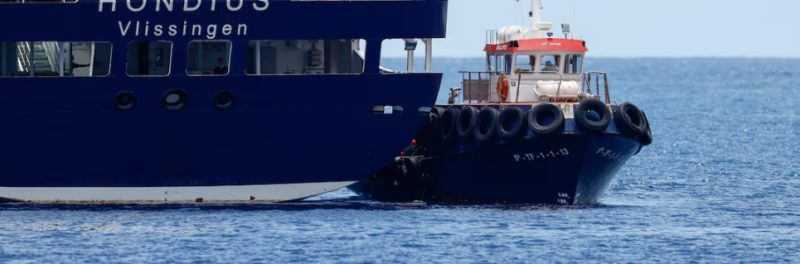
Trump Addresses Public After Cruise Passengers Return
President Trump said Monday that the United States is being “very careful” as health officials monitor the ongoing hantavirus outbreak tied to a South Atlantic cruise ship, while insisting the disease is nowhere near as easily transmissible as COVID-19.
Speaking during an Oval Office event, Trump sought to reassure the public as international concern continues growing following multiple confirmed infections and deaths connected to the MV Hondius expedition cruise.
“It’s been around for a long time. People are very familiar with it,” Trump told reporters. “So, you know, I hope it’s fine. All I can do is everything that a president can do, which is actually somewhat limited, but it seems like it is not easy to spread.”
Trump emphasized that the Andes strain of hantavirus involved in the outbreak spreads far less aggressively than COVID-19.
“It’s in certain ways very hard to spread,” the president added. “We’ve lived with it for years, many years, and we think we’re in very good shape. We’re very careful, and Nebraska has done a fantastic job.”
The outbreak began aboard the MV Hondius after a passenger reportedly developed symptoms around April 6 before dying several days later. Panic spread among passengers after the first fatality, prompting several Americans to leave the vessel early.
By Sunday, officials had begun evacuating infected and potentially exposed passengers from the ship while it remained anchored near Spain’s Canary Islands.
Among those evacuated were 17 Americans who had remained aboard for nearly a month as the outbreak unfolded.
Hantavirus is typically carried by rodents and can cause severe respiratory illness, high fever, vomiting, diarrhea, and potentially fatal lung complications. According to the Centers for Disease Control and Prevention, approximately 38% of patients who develop respiratory symptoms die from the disease.
Despite the alarming fatality rate, health officials continue stressing that hantavirus does not spread easily between humans and requires extremely close and prolonged contact in rare cases where person-to-person transmission occurs.

Health and Human Services Secretary Robert F. Kennedy Jr., who appeared alongside Trump, insisted federal authorities have the situation under control.
“We have this under control and we’re not worried about it,” Kennedy said.
Kennedy also pushed back aggressively against criticism that the CDC responded too slowly to the outbreak.
“We’ve had CDC teams on it from day one,” he said.
According to Kennedy, federal authorities had aircraft ready to transport infected Americans immediately after concerns escalated aboard the ship.
“We had airplanes ready to take the patients, the 17 patients, off the vessel,” Kennedy explained. “Two of them went to Atlanta. One of those was symptomatic. They’re in a biocontainment lab in Atlanta. The other 16 are now in Nebraska.”
The Trump administration has also rejected claims that the president’s withdrawal from the World Health Organization weakened America’s ability to respond to the outbreak.
“No, I’m glad,” Trump said regarding the WHO withdrawal. “We were paying the World Health Organization $500 million a year … and we weren’t being treated well, and they were making the wrong diagnoses.”
The administration continues pointing to the WHO’s handling of the COVID-19 pandemic as justification for distancing the United States from the organization.
Acting CDC Director Dr. Jay Bhattacharya has similarly attempted to calm fears, repeatedly stressing that the outbreak bears little resemblance to the early stages of COVID.
“This is not COVID,” Bhattacharya said during a Sunday appearance on CNN. “This is not going to lead to the kind of outbreak that brought the world to a halt six years ago.”
Bhattacharya pointed to previous successful containment efforts, including a 2018 hantavirus outbreak in Argentina that killed 11 people but was ultimately stopped through established isolation protocols.
At present, officials say there are three confirmed deaths tied to the current outbreak and roughly 10 suspected cases still under investigation.
There remains no cure for hantavirus, though early medical intervention can improve survival odds significantly.