

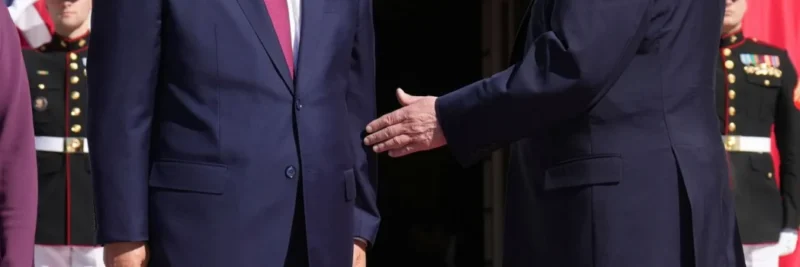
Trump Unloads On Perdue After Bizarre China Claim
President Donald Trump directly denied his Ambassador to China, David Perdue, claimed he offered to sell weapons to President Xi Jinping. The White House confirmed this dispute on Monday after Perdue spoke to Fox News on Sunday. Trump stated he never heard of such a discussion and suggested Perdue meant Taiwan instead. This sharp public split puts the administration's messaging on China in question.
Perdue told reporters that Trump asked the Chinese leader if he wanted to buy American arms.
Trump pushed back immediately when asked about the story. He told the press, "To China? You mean to Taiwan?" He also said, "I never heard of that one. I'm going to have to ask him." The Washington Times noted that Trump dismissed the ambassador's claims entirely during his Monday briefing.
U.S. law blocks any sale of weapons to China right now. The State Department issued a clear statement to settle the confusion. They said, "U.S. law prohibits arms sales to China and there is no offer or plan to sell arms to China." This legal ban started after the 1989 events in Tiananmen Square, according to the Washington Examiner.
Trump acknowledged the potential interest from Beijing but denied the specific offer. He told reporters, "Now, they'd probably like to buy it because we do make better equipment than them, so maybe it's a good idea. But we didn't discuss it." This comment suggests the idea makes sense in theory but did not happen in practice.
🚨@POTUS on U.S. military equipment sales to China with Xi: “We didn’t discuss that.” pic.twitter.com/IF7ZwzhKin
— Off The Press (@OffThePress1) September 28, 2026
While this dispute plays out, other military talks face delays. The administration has paused a record-breaking $14 billion aid package for Taiwan. Senators Mitch McConnell, John Cornyn, Lisa Murkowski, and Thom Tillis wrote a letter to War Secretary Pete Hegseth and Secretary of State Marco Rubio. They asked for an explanation on why the funds are held up.
Confusion at the top creates risk for our allies and our safety. When the White House and its envoys tell different stories, it weakens our standing abroad. The senators warned that delaying aid to Taiwan hurts U.S. influence in the Indo-Pacific. They wrote, "It is difficult to "

For American families, this signals a need for clear, consistent leadership. We need to know if our government can speak with one voice on threats from China. If the ambassador is wrong, it shows a breakdown in communication. If the President is right, it shows the ambassador spoke out of turn. Either way, the public deserves the truth.
Trump called the military package a "very good negotiating chip" in relation to China. This suggests he might use the delay as leverage in future talks. However, holding back support for Taiwan could embolden Beijing. The senators believe denying partners key tools to defend themselves is a bad deal for America.
The situation remains fluid as the ambassador likely faces questions from the President. Trump said he needs to ask Perdue about the specific conversation. No official correction has been issued by the ambassador's office yet. Chinese state media reported that Xi asked Trump to oppose Taiwan independence during their recent visit.

The Senate letter demands answers on the $14 billion delay.